

Published on: 03/17/2026
This news was posted by Apex Wealth Advisors


Description


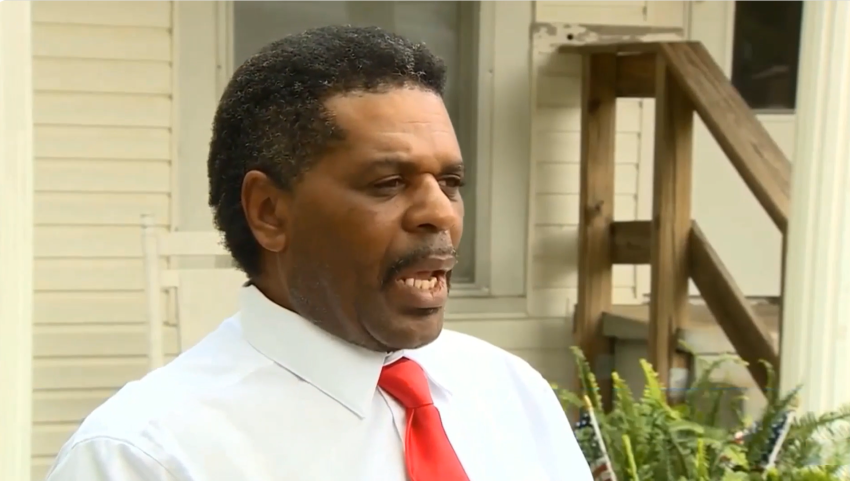
Police officers can require people to show physical identification during an investigative stop if they provide an incomplete or unsatisfactory response, the Alabama Supreme Court has ruled in the case of a former police officer and Pastor Michael Jennings.
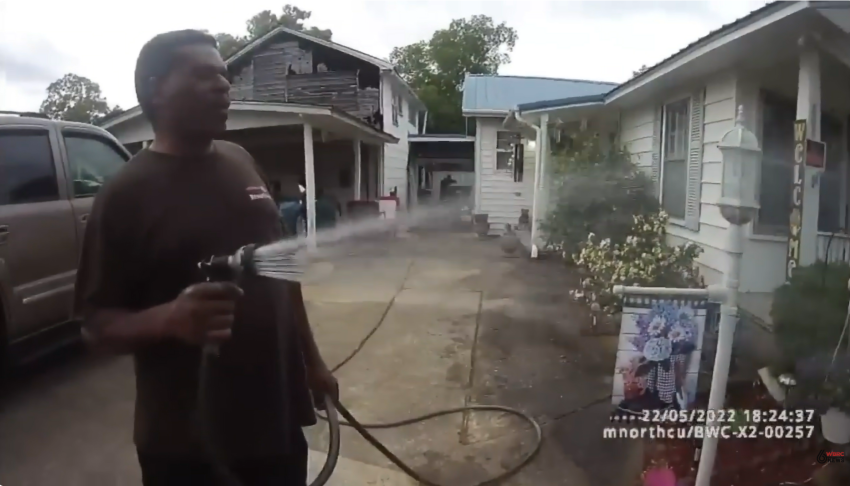
The case centered on an incident in 2022 in which police officers arrested Jennings while he was watering the plants of a neighbor who was out of town, believing that the pastor had failed to properly identify himself when asked.
Alabama's highest court ruled last Friday in the case of Jennings v. Smith, et al. that "the suspect bears the burden to completely identify himself or herself during" certain police encounters.
The Supreme Court of Alabama consists of Chief Justice Sarah Hicks Stewart and Associate Justices Greg Shaw, Kelli Wise, Tommy Bryan, William B. Sellers, Brady Mendheim, Jr., Greg Cook, Chris McCool and Will Parker.
In his majority opinion, Sellers, supported by Justices Wise, Parker, Bryan, Cook and Shaw, concluded that police officers, under Ala. Code § 15-5-30, are legally empowered to request physical identification if they have “reasonable suspicion to believe that a suspect is committing, has committed, or is about to commit a felony or other public offense.”
Some justices, including Stewart, however, do not believe the state Supreme Court should have intervened in the case, naming police officers Christopher Smith, Justin Gable, Jeremy Brooks and the city of Childersburg as defendants.
“This case is postured such that this Court essentially is reviewing the decision of the Eleventh Circuit Court of Appeals in Jennings II rather than entertaining a question from that SC-2025-0372 38 court regarding Alabama law for purposes of prospective application to the case,” wrote Mendheim in a dissent supported by Stewart and McCool. “I do not believe that reflects a proper use of Rule 18, Ala. R. App. P.”
Mendheim argued that the Alabama Supreme Court should have declined to address the question of whether police officers can ask suspects for physical identification out of respect for the higher court.
“I agree with the main opinion that Ala. Code 1975, § 15-5-30, does not prohibit a law-enforcement officer from demanding physical identification when a person whom the officer reasonably suspects is about to commit a felony or other public offense fails to provide an adequate name, address, or explanation of his or her actions for purposes of identification,” he wrote.
“Nevertheless, I dissented from the Court's decision to accept the question before us and believe we should decline to answer the question due to basic principles of comity with the federal courts.”
Last Friday’s ruling appears to question a 2024 ruling by the Eleventh Circuit Court of Appeals regarding the 2022 arrest of Jennings, who was watering his neighbor’s plants in Childersburg, Alabama. The ruling reversed a lower court’s decision to dismiss a lawsuit filed by Jennings, accusing officers Smith and Gable, as well as Sgt. Brooks and the city of violating his constitutional rights, which protect him from unlawful arrest and guarantee free speech.
“While it is always advisable to cooperate with law enforcement officers, Jennings was under no legal obligation to provide his ID. Therefore, officers lacked probable cause for Jennings’ arrest for obstructing government operations because Jennings did not commit an independent unlawful act by refusing to give ID,” they wrote in their 2024 ruling.
“… these officers lacked even arguable probable cause. Accordingly, we reverse the district court’s grant of summary judgment on Jennings’ unlawful arrest claim because the officers are not entitled to qualified immunity.”
A 20-minute body camera video of the May 2022 arrest of Jennings, who leads the Vision of Abundant Life Ministries in Sylacauga, shows him being confronted by the officers after he was reported by a neighbor for watering the garden of a friend who was out of town at the time.
Though Jennings identified himself as a pastor and told the officers he was caring for his neighbors' plants, and that he lived across the street, he was arrested without probable cause.
"I'm supposed to be here. I'm Pastor Jennings. I live across the street," Jennings told the officers on the video as they interrogated him. “I'm looking out for their house while they're gone, watering their flowers."
The police officers were further assured by a neighbor around the seventh minute of the recording that the pastor and the owner of the home are friends and neighbors, and it was completely normal for him to water his plants while the homeowner was out of town.
In the video, Brooks tells Jennings, “Everything is being audio and video recorded. You won’t shut your mouth.”
Pastor Jennings shouted back, “You don’t shut your mouth. You don’t talk to me like I’m a child, boy!” The Officers then arrested Jennings and placed him in the back of the police cruiser.
It was further noted by the 2024 appeals court ruling that Jennings’ arrest was retaliatory for objecting to the way officers were speaking to him during the encounter.
“Jennings claims that his speech was a motivating factor for his arrest because the officers decided to arrest him only after he protested the way the officers were speaking to him and Officer Brooks explained, ‘You talked your way into going to jail.’ This evidence seemingly points to speech as a motivating factor for the arrest,” noted the 2024 ruling.
News Source : https://www.christianpost.com/news/alabama-supreme-court-rules-police-can-ask-for-id.html
Other Related News

03/18/2026
About a month into my marriage I woke early one morning made coffee and settled into my st...
03/17/2026
WASHINGTON March Madness set records by almost every measure last year crowds ratings an...

03/17/2026
By Leah MarieAnn Klett Assistant Editor Tuesday March 17 2026Jonathan McReynolds Courte...
03/17/2026
The Moody Bible Institute has reached a favorable settlement with the Chicago Board of Ed...

Follow


Download Our App


Copyright 2022 © Pro Preview. All Rights Reserved