

Published on: 04/08/2026
This news was posted by Apex Wealth Advisors


Description
Archaeologists working near the Sea of Galilee — a region closely associated with the ministry of Jesus — have uncovered a 1,400-year-old Christian artifact that researchers believe offers new insight into early baptism practices.
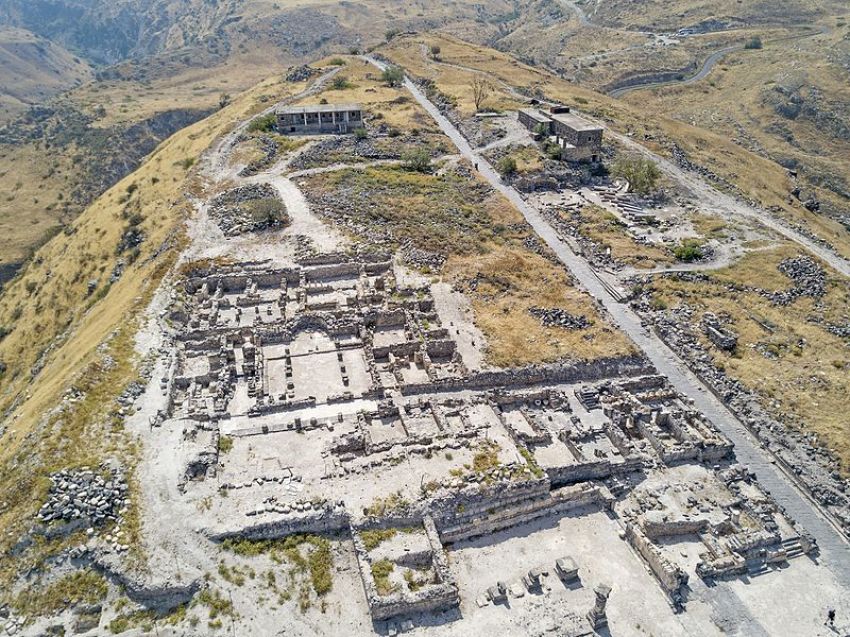
The discovery was made in the ancient city of Hippos, also known as Sussita, which was an important episcopal seat during the Byzantine era, according to an announcement shared with The Christian Post.
Following an “extensive examination and comparison,” scholars concluded that “no known parallels to the artifact exist.”
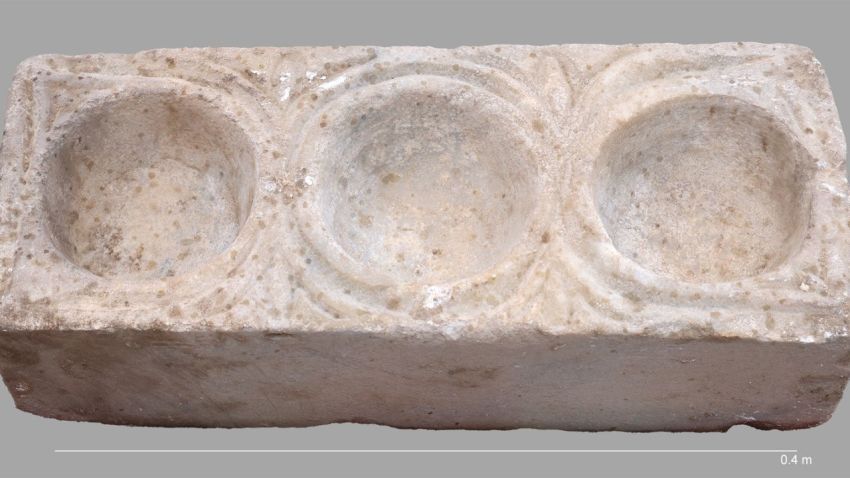
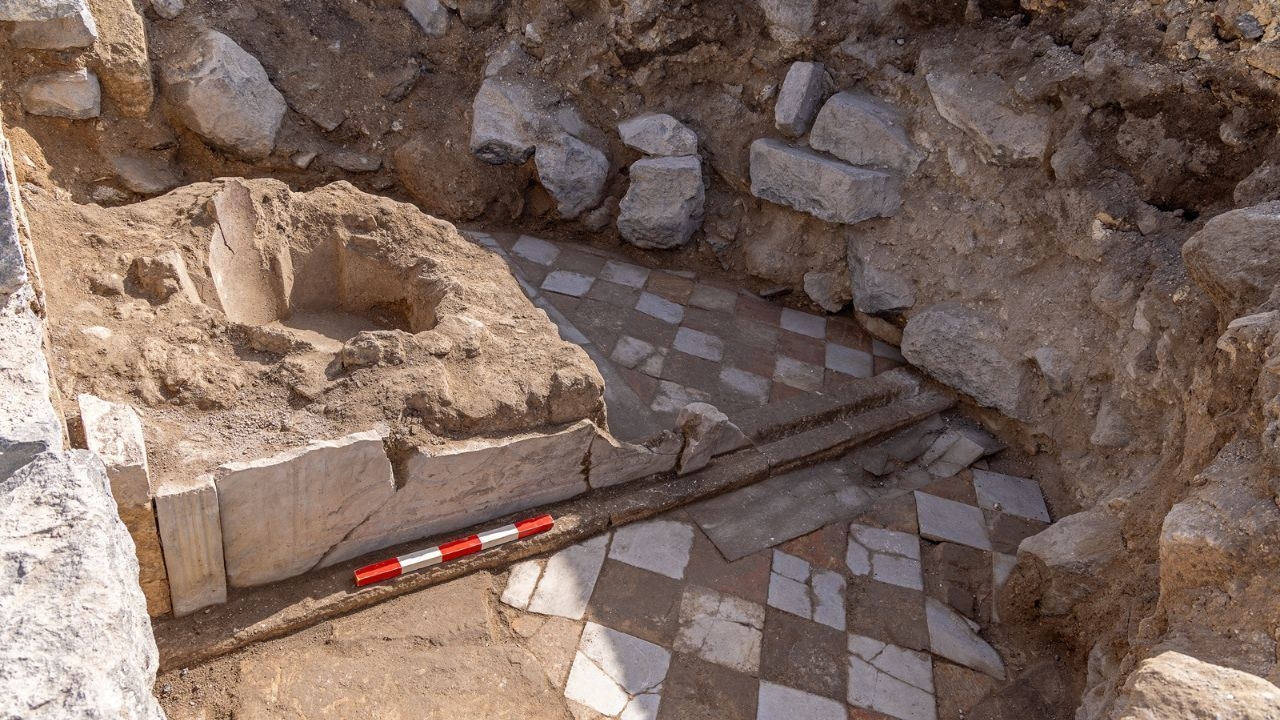
Researchers found the object, a roughly 1,400-year-old marble block, in a baptismal hall called a photisterion. The artifact was discovered in the baptismal hall for infants and children at Hippos’ cathedral, constructed after 591 A.D. and later destroyed in an earthquake in 749 A.D.
Officials described the artifact as “a rectangular block bearing three hemispheric cavities, found beside a baptismal font in a newly revealed ceremonial hall.” Experts believe the block may have held different oils used in a threefold baptismal immersion ceremony, which typically involves submerging the candidate in water three times.
According to researchers, the collapse triggered by the earthquake appears to have “buried the marble and bronze artifacts beneath the rubble, preserving them until their recent discovery.”
Last month, Michael Eisenberg, an archaeologist at the University of Haifa, and his colleague Arleta Kowalewska published the results of the excavations at the Byzantine-period cathedral of Hippos in the journal Palestine Exploration Quarterly.
The report mentioned the discovery of “known liturgical implements,” including a bronze candelabrum and a marble reliquary, but noted that the “marble stone with three hemispheric cavities” may “shed light on the type of baptismal-related rites practiced in the Hippos cathedral.”
“Interestingly, this is the second photisterion that was part of this church complex, making the Hippos cathedral the only early church known to date with two photisteria,” Eisenberg and Kowalewska’s report noted.
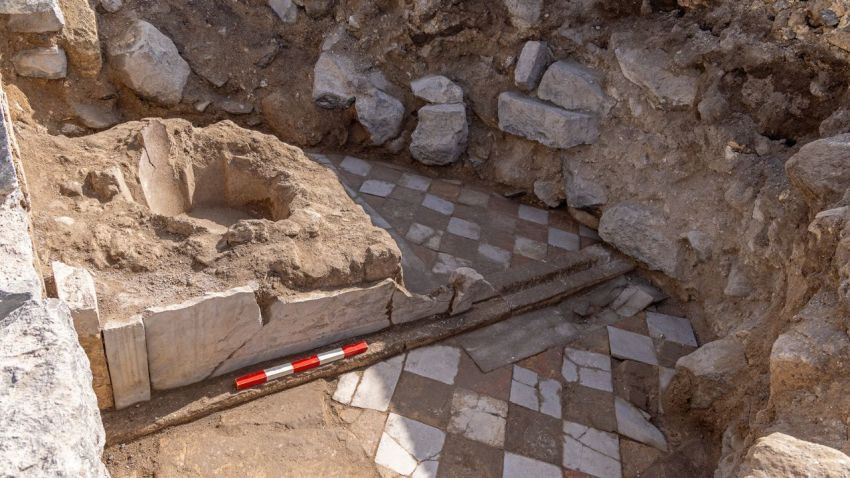
“While the northern photisterion was part of the cathedral complex probably from its first phase, the southern baptismal font seems to have been added after the 590/1 [A.D.] renovations of the complex into a space that was probably a martyrion. This unusual find of a baptismal font built in a corner of a chapel, unearthed with part of its surrounding utensils surviving to our times, is introduced here to spark discussion of its full interpretation and how it expands our knowledge of Byzantine-period Christian communities and their rites,” the document continued.
Excavations at Sussita have been ongoing for over 20 years, and this is not the first time a project directed by Eisenberg and Kowalewska has resulted in the announcement of a discovery that offers insights into the ancient world.
Last year, archaeologists announced the discovery of a rare cache of Byzantine-era gold coins. Researchers discovered the coins last July but waited to announce the discovery until confirming that no other caches were located in the area.
The large hoard of gold coins was accompanied by articles of gold jewelry, semiprecious stones, pearls and glass, as well as evidence of a coin purse. The coins date from the reign of Emperor Justin I (518–527 A.D.) to the reign of Emperor Heraclius (610–613 A.D.).
“This is one of the largest hoards from the Byzantine period discovered on dry land in Israel, and its uniqueness lies in the combination of jewelry and gold coins from the reigns of different emperors,” Eisenberg said in a statement at the time.
“Remnants of fabric were found on some of the coins — a trace of the cloth pouch in which the hoard had been hidden,” he added.
News Source : https://www.christianpost.com/news/ancient-baptismal-artifact-uncovered-near-sea-of-galilee.html
Other Related News

04/08/2026
By Leonardo Blair Senior Reporter Wednesday April 08 2026The late Tammy McCollum R 58 a ...
04/08/2026
By Ryan Foley Christian Post Reporter Wednesday April 08 2026A mother incarcerated at Fe...

04/08/2026
The Printz family uses a popular God-centered homeschool curriculum called Classical Conv...
04/08/2026
By Samantha Kamman Christian Post Reporter Wednesday April 08 2026ReutersA criminal case...

04/08/2026
By Michael Gryboski Editor Wednesday April 08 2026Volunteers with Overcoming Believers C...

Follow


Download Our App


Copyright 2022 © Pro Preview. All Rights Reserved