

Published on: 04/30/2026
This news was posted by Apex Wealth Advisors


Description
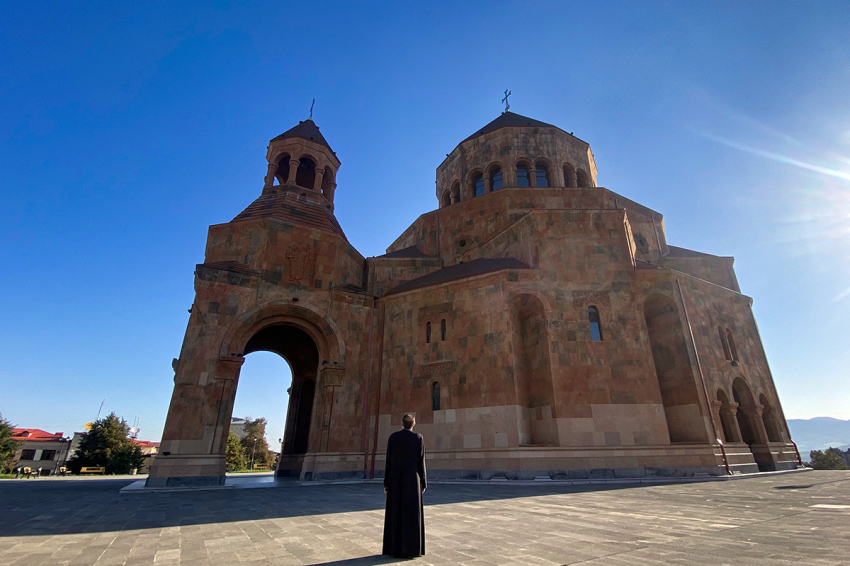
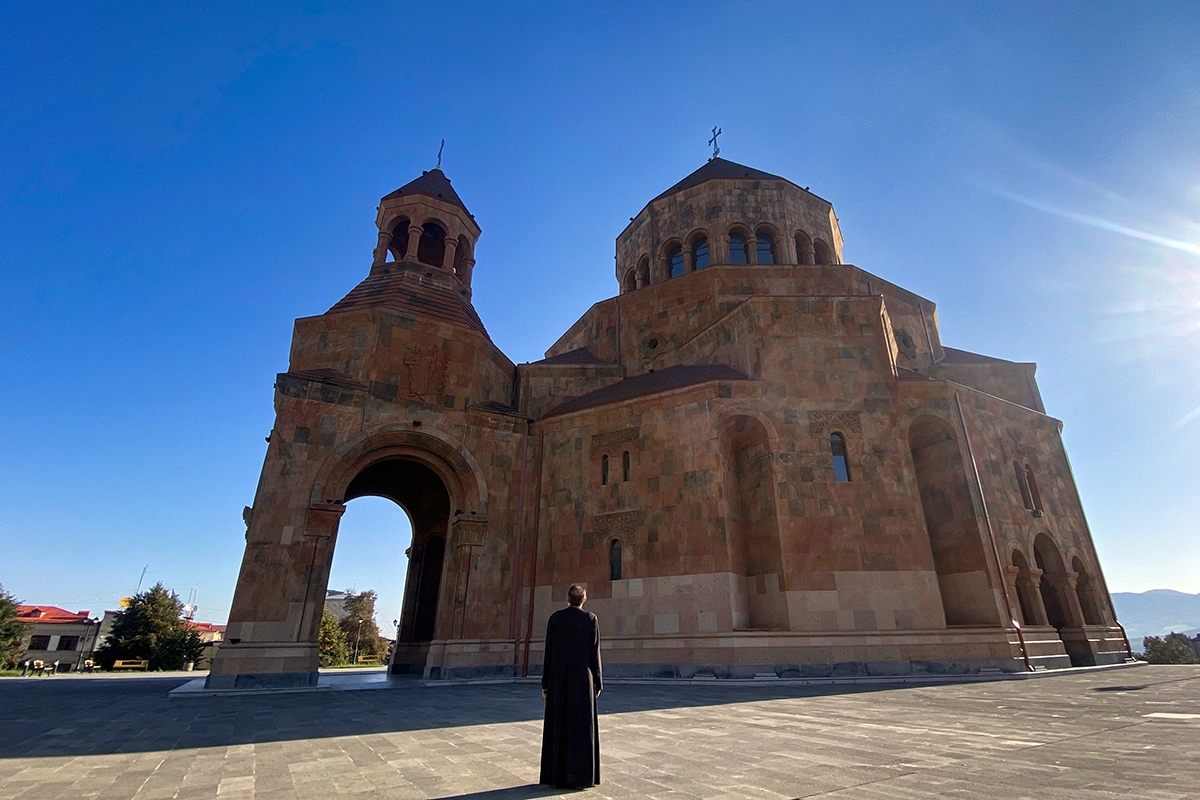
Satellite imagery has confirmed the demolition of two historic Christian churches in Stepanakert, the main city in the Nagorno-Karabakh region held by Azerbaijan since September 2023, with Armenia's church authorities calling it a deliberate campaign to erase Armenian religious heritage from the territory.
The Holy Mother of God Cathedral, the principal site of Christian worship in Stepanakert, called Khankendi by Azerbaijanis, has been razed, Radio Free Europe reported, based on satellite imagery taken on Sunday.
Construction of the cathedral began in 2006, and the site was consecrated in 2019. During the Azerbaijani military offensives in the 2020s, the cathedral’s basement was used as a bomb shelter by residents.
A social media post from early February showed a construction-type fence surrounding the cathedral. The building is believed to have been demolished by early April.
Baku Confirms it Demolished Stepanakert Cathedral pic.twitter.com/4W2ctFgm6N
— Asbarez News (@Asbarez) April 27, 2026
Along with the cathedral, satellite imagery confirmed the Church of St. Jacob, another major Christian site in the city, was also destroyed in recent weeks. Completed in 2007, the church was funded by an Armenian-American philanthropist in memory of his deceased son. Cross stones in the grounds surrounding the demolished church have also been destroyed, according to the Armenian church.
The Caucasus Muslims Board, a religious body affiliated with the Azerbaijani government, confirmed the state-planned demolition of both churches, according to Asbarez.
The board said the structures had been “illegally” constructed during what it called the Armenian occupation of Azerbaijani territory, and argued the demolition “cannot be distorted in any way as the destruction of religious or cultural heritage.” It added that Azerbaijanis who returned to the city had urged authorities to remove structures that did not exist there before the period it described as “occupation.”
Last week, the Mother See of Holy Etchmiadzin, the governing authority of the Armenian Apostolic Church, accused Azerbaijan of “deliberately target[ing] Armenian Christian holy sites, seeking to erase the Armenian presence” in Nagorno-Karabakh, Middle East Eye reported.
The Caucasus Muslims Board dismissed that statement as “a manifestation of hostility and disinformation.”
Elnare Akimova, a member of Azerbaijan’s parliament, called reports of the churches’ destruction “a provocation by revanchist forces” and said Azerbaijan “has preserved religious and historic monuments on its territories as a state policy.”
Lernik Hovhannisyan, chairman of the Artsakh Diocesan Council, the administrative body of the Armenian church in the Nagorno-Karabakh region that Armenians call Artsakh, disputed the Azerbaijani government’s framing. He was quoted as saying that Armenians had always been the predominant population of Stepanakert, and that Azerbaijanis were brought to the city’s upper Krkzhan district in the 1960s to change demographic conditions in what was then the Nagorno-Karabakh Autonomous Oblast.
Hovhannisyan also questioned why the Azerbaijani justifications made no mention of the Green Hour and Mokhrenes churches, built in the 18th and 19th centuries, which were destroyed in the nearby city of Shushi. He said it was inconsistent with how Azerbaijan presents itself as a tolerant country where, in its own telling, “a church, a mosque, and a synagogue operate side by side.” He asked where the 27,000 monuments of Nakhichevan and the monuments of northern Artsakh now stood.
Hovhannisyan argued the demolitions were incompatible with international standards on self-determination.
The Organization for Security and Co-operation in Europe, or OSCE, Minsk Group, the multinational mediation body co-chaired by France, Russia and the United States that had worked since 1992 to find a negotiated resolution to the Nagorno-Karabakh conflict, had recognized the right of the Armenian population of the territory to self-determination in its documents.
The group had been effectively moribund since Russia’s full-scale invasion of Ukraine in February 2022 severed working relations among its co-chairs, and it ceased all substantive activity after Azerbaijan’s September 2023 offensive.
The demolitions have stirred controversy ahead of Armenia’s upcoming parliamentary elections, with critics accusing Prime Minister Nikol Pashinyan of failing to press the issue or seek international condemnation of Baku for the destruction of Christian holy sites in the territory.
Pashinyan said his government was working to gather complete information on the matter, but stopped short of condemning Baku. “I do not think that, taking into account our previous experience, we will make this a subject of international discussions at the state level,” he was quoted as telling reporters. He also said “such topics are a double-edged sword,” calling instead for “prudence.”
Around 120,000 ethnic Armenians fled Nagorno-Karabakh following a series of Azerbaijani military offensives that culminated in Azerbaijan’s full capture of the territory in September 2023. Armenians captured during the conflict remain jailed in Azerbaijan.
In a post on X, Nadine Maenza, former chair of the U.S. Commission on International Religious Freedom, or USCIRF, called the destruction of churches “Cultural genocide after the ethnic cleansing of 120,000.”
News Source : https://www.christianpost.com/news/azerbaijan-destroys-historic-churches-in-nagorno-karabakh.html
Other Related News
04/30/2026
JERICHO Judean Desert Long before modern cities and borders an ancient priestly family ca...

04/30/2026
Have you been watching the news There is no doubt the times we live in are troublesome...


04/29/2026
By Ryan Foley Christian Post Reporter Wednesday April 29 2026iStockStockPlanetsA new sur...

Follow


Download Our App


Copyright 2022 © Pro Preview. All Rights Reserved