


Published on: 12/29/2025
This news was posted by Apex Wealth Advisors


Description
When you read the New Testament, you often come across the name Herod. There were different rulers called Herod who formed part of the background history of Jesus and the New Testament. This is the story …
King Herod the Great
The name Herod does not refer to one king but to a family line of rulers installed and sustained by Rome. We first read the name Herod in the New Testament at the start of Matthew and Luke. Luke sets the birth of John the Baptist “during the time when Herod was king of Judea” (Luke 1:5), and Matthew tells us that “Jesus was born in the town of Bethlehem in Judea, during the time when Herod was king” (Matthew 2:1).
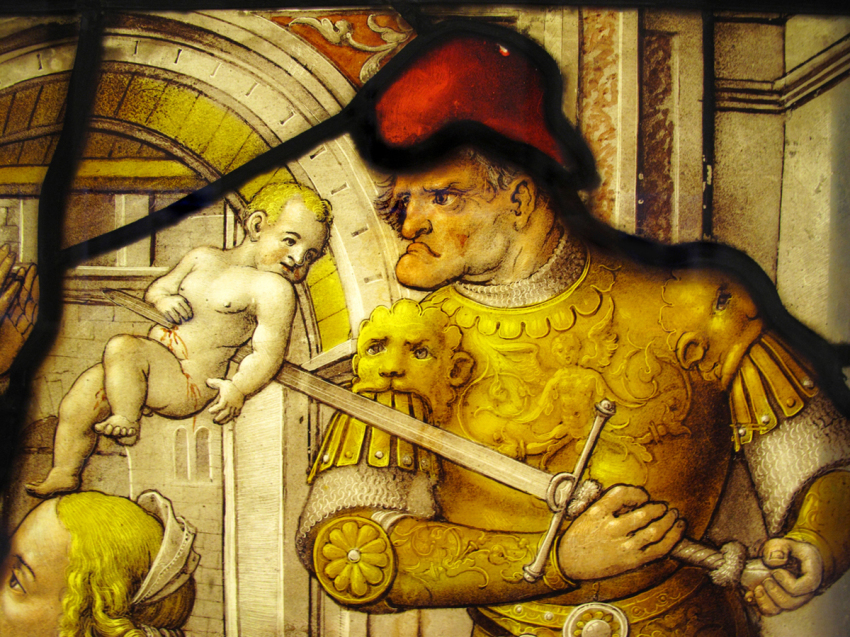
This Herod, later known as Herod the Great, meets the visiting wise men, or Magi, hears of a “king of the Jews,” and fears a potential rival. Disturbed by the prophecy of a Messiah, he orders the slaughter of all the boys under 2 years old in and around Bethlehem (Matthew 2:16).
Herod died in Jericho around 4 BC (some argue for 1 BC) and was buried at Herodium, where a tomb widely identified as his was discovered in 2007. After his death, he became known as Herod I or Herod the Great, to distinguish him from the other Herods who followed, but during his lifetime he was simply “King Herod.”
Division of the kingdom
After Herod’s death, Caesar Augustus divided Herod’s kingdom between three of his sons. Archelaus became ethnarch over Judea, Samaria and Idumea. Herod Antipas became tetrarch of Galilee and Perea in the North. Philip became tetrarch of the territories of Iturea and Trachonitis to the North and East of Galilee. Another son, sometimes called Herod II (or Herod Philip), lived in Rome as a private citizen with his wife, Herodias, who later appears in the Gospel story.
Herod Archelaus
After Herod the Great died, Joseph and Mary would naturally have hoped it was safe to leave Egypt and return home. Joseph, however, seems to have waited for news of the new ruler. Matthew explains that “when Joseph heard that Archelaus had succeeded his father Herod as king of Judea, he was afraid to go there” (Matthew 2:22).
Herod Archelaus was regarded as cruel, and many thought him even crueler than his father, though his rule was limited to Judea and Samaria. Joseph therefore took Mary and Jesus, and any children born in Egypt, and returned instead to Galilee, back to Nazareth, where they had lived before, under the less harsh rule of Herod Antipas.
Archelaus reigned until AD 6, when he was deposed by Rome. Some scholars think he might be the real-life ruler behind Jesus’ Parable of the Minas in Luke 19:11–27, with its story of a man who goes away to receive a kingdom and is hated by his subjects.
Herod Antipas
Herod Antipas, tetrarch of Galilee and Perea, dominates the Gospel period. Early in his reign, he married the daughter of King Aretas IV of Nabatea, whose territory bordered Perea and had its capital at Petra. But on a visit to Rome, staying with his half-brother Herod Philip, Antipas fell in love with Philip’s wife, Herodias. Antipas and Herodias agreed to marry once he had divorced his Nabatean wife; Herodias herself divorced Philip, by whom she already had a daughter, in order to marry Antipas. This scandalized Jewish society and caused diplomatic trouble with the Nabateans.
Herodias and John the Baptist
John the Baptist publicly denounced this arrangement, pointing out that it broke the Jewish law that a man must not marry his brother’s wife (Leviticus 20:21). Herod Antipas did not appreciate the criticism and had John arrested and chained in prison (Matthew 14:3; Mark 6:17–29).
At Antipas’ birthday banquet, Herodias’s daughter danced for the guests and pleased Herod so much that he rashly promised her anything she asked (Matthew 14:6–7). The girl, who is unnamed in the Gospels but is called Salome by Josephus, asked, at her mother’s prompting, for the head of John the Baptist, and John was beheaded in prison (Matthew 14:10–11). Luke locates John’s ministry and execution “in the fifteenth year of the reign of Emperor Tiberius … when Herod was tetrarch of Galilee” (Luke 3:1), which helps to date the events to around AD 29.
Herod Antipas and Jesus
News of John’s execution reached Jesus and His disciples. Among Jesus’ followers was Joanna, the wife of Chuza, the steward of Herod’s household (Luke 8:3). She may well have been the source of some of the “inside story” of Herod Antipas and his court.
A few years later, at the time of the crucifixion, Luke tells us that Pilate, hearing that Jesus was a Galilean, sent him to Herod Antipas, who happened to be in Jerusalem (Luke 23:7–12). Antipas questioned Jesus, mocked him, and dressed him in an elegant robe, but finding him no real threat, sent him back to Pilate. Luke notes that on that day Herod and Pilate became friends (Luke 23:12).
Herod Antipas is mentioned in Matthew 14:1–6; Mark 6:14–22; 8:15; Luke 3:1, 3:19–20; 9:7–9; 13:32; 23:7–12, 15; and in Acts 4:27 and 13:1. He died in AD 39 and was succeeded in Judea by his cousin’s son, Herod Agrippa.
Herod Agrippa I
In Acts, we meet another “King Herod” during the first wave of persecution against the Church. Luke writes, “It was about this time that King Herod arrested some who belonged to the church, intending to persecute them” (Acts 12:1).
This Herod is Herod Agrippa I, a grandson of Herod the Great. He was the son of King Herod’s son Aristobulus by Princess Mariamne of the Hasmonean royal family, so he combined Herodian and Hasmonean blood and was therefore seen by many Jews as having more legitimacy than his grandfather.
Agrippa I ruled Judea from AD 37 to 44 and sought favor with Jewish leaders by attacking the Church. He had James the apostle, the son of Zebedee, executed (Acts 12:2), and imprisoned Peter, who was dramatically freed from his chains and led out of prison by an angel (Acts 12:6–11). Agrippa’s children included a son, also called Herod Agrippa, and daughters Berenice and Drusilla. Luke also mentions Manaen, “who had been brought up with Herod the tetrarch” (almost certainly Herod Antipas), serving among the prophets and teachers in Antioch (Acts 13:1).
Herod Agrippa II and Drusilla
Later, in Acts 25–26, we meet “King Agrippa,” who listens to Paul’s defense in Caesarea. This is Herod Agrippa II, son of Herod Agrippa I and brother of Berenice and Drusilla. Agrippa II presides over Paul’s hearing before the apostle is sent to Rome and famously responds, “In this short time do you think you will make me a Christian?” (Acts 26:28). He is the last of the Herodian rulers to appear in the New Testament and the last of the line before Jerusalem’s destruction in AD 70.
Drusilla, Agrippa II’s sister, also appears in Acts. She had married Antonius Felix, the Roman procurator of Judea, who presided over one of Paul’s earlier hearings (Acts 24). Luke notes that Felix and Drusilla sent for Paul and listened to him speak about “faith in Christ Jesus” (Acts 24:24–25); she did not need to attend, but seems to have been intrigued or genuinely interested. They had a son, Marcus Antonius Agrippa, who was later killed in the eruption of Mount Vesuvius in AD 79.
Summary
All the different Herods in the New Testament can be confusing, but their backstory sheds light on the world in which Jesus lived and from which the early Church emerged.
Four generations of this dynasty appear in the New Testament, from Herod the Great at the birth of Jesus to Herod Agrippa II at the trials of St Paul. Among them are fierce opponents of the Gospel, curious onlookers, and even people on the edge of faith. Fleshing out their backstory, which would have been known to many of the original readers, helps to build the context for many of the events of the New Testament.
This article was originally published at Christian Today
News Source : https://www.christianpost.com/news/who-were-all-the-herods-in-the-new-testament.html
Other Related News

12/29/2025
Despite lingering concerns over inflation 2025 brought some impressive gains in the US st...

12/29/2025
Much of the US is dealing with severe weather during one of the busiest travel times of t...

12/29/2025
At the start of this new year Im guessing most of us are feeling hopeful It is a time ...

12/29/2025
By Anugrah Kumar Christian Post Contributor Monday December 29 2025Getty ImagesAmid decl...

12/29/2025
By Christian Daily InternationalMonday December 29 2025KeithBinnsiStockGovernment-sponso...

Follow


Download Our App


Copyright 2022 © Pro Preview. All Rights Reserved