

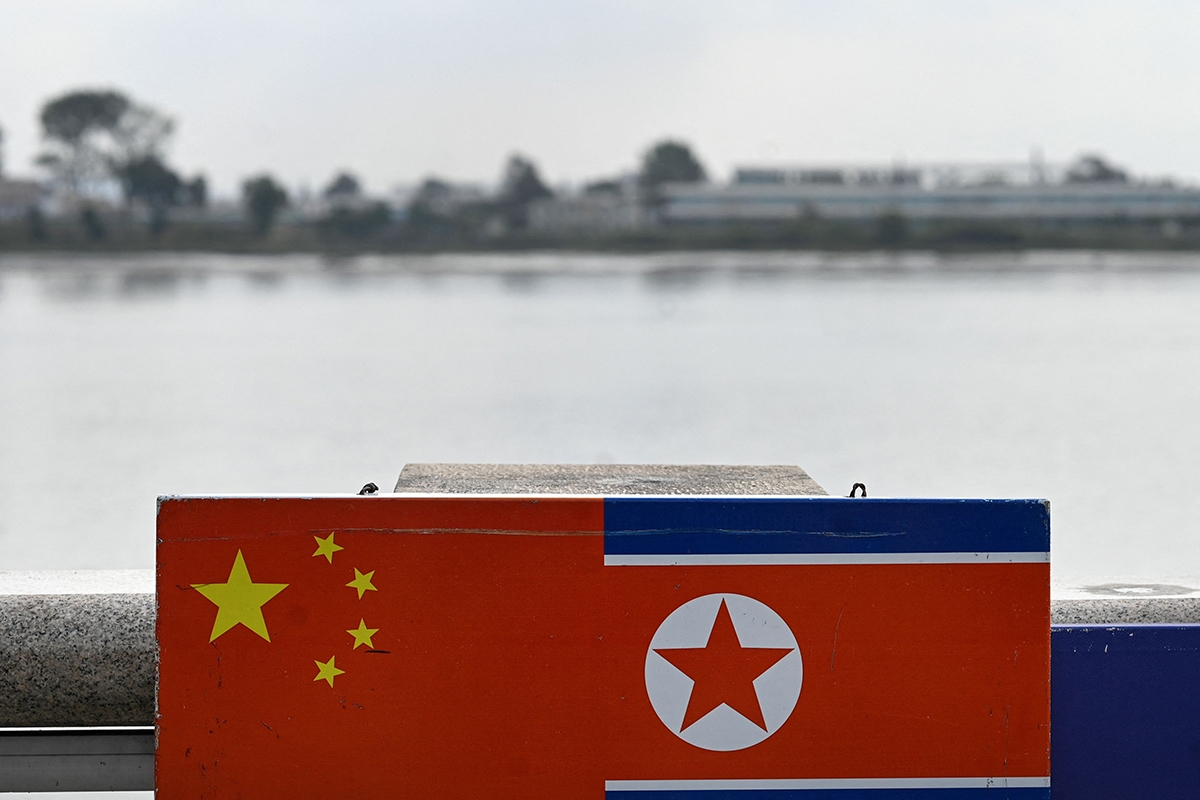
Published on: 05/02/2026
This news was posted by Apex Wealth Advisors


Description
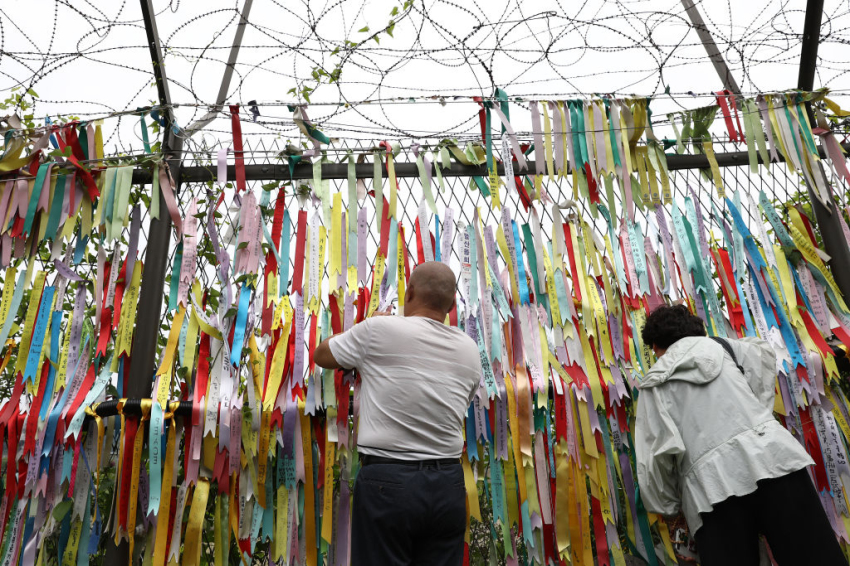
WASHINGTON — At the age of 29, Hyun-Seung Lee began to understand that the world he knew in North Korea was not the whole truth.
After his 23-year-old friend was sent to a prison camp and reports emerged of executions targeting colleagues and acquaintances, Lee and his family were willing to “give up everything” to no longer have to serve the regime.
“Before we came to China, we really didn’t know about the differences between North Korea and the rest of the world,” Lee told The Christian Post.
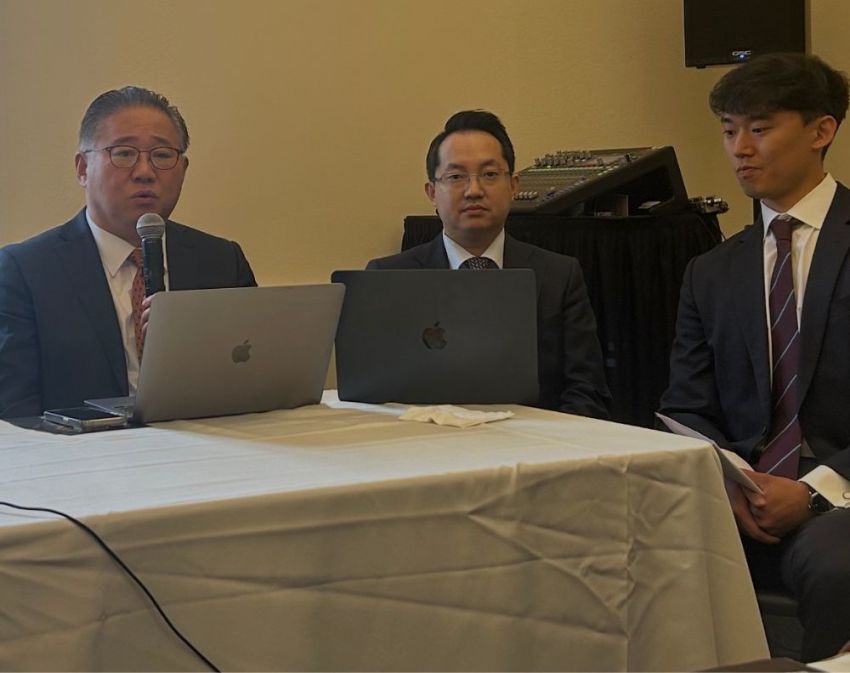
The North Korean escapee was one of several people who spoke at the Cannon House Office Building on Wednesday as several North Korea Freedom Week events took place in the nation’s capital.
The event — titled “U.S. Policy for a Free & Unified Korea" and hosted by the Global Peace Foundation, Action for Korea United, Defense Forum Foundation and Alliance for Korea United, USA and One Korea Foundation — combined policy discussion with firsthand testimony from people like Lee who have fled the Democratic People’s Republic of Korea.
These discussions coincided with the findings of a report released this week by the Seoul-based NGO Transitional Justice Working Group.
The report, compiled by witness testimony from North Korean defectors and sources within the country, found that executions and death sentences in the DPRK have increased by 117% since the country closed its borders at the outbreak of the COVID-19 pandemic.
According to the report, which mapped 13 years of executions under Kim Jong-un, executions for religious and "superstitious folk" activities increased since the Anti-Reactionary and Thought Crime Law was enacted in 2020. The law criminalizes the viewing and dissemination of Western and South Korean content.
While death penalty cases for murder declined by 44.4% following the border closure, the report found that offenses related to foreign culture, religion, and “superstition” experienced the largest growth, increasing by 250% (from 4 to 14), while the number of condemned persons increased by 442.9% (from 7 to 38).
Prior to his family’s defection in 2014, Lee was a sergeant in the DPRK Army Special Force and was also involved in the North Korean shipping and mining sectors, facilitating trade between North Korea and China.
Growing up in the North Korean capital of Pyongyang, the Lee family had certain privileges that other citizens didn’t have. Lee’s father was committed to the regime as a senior economic official, allowing the family to travel to China.
When the family made the decision to defect from North Korea, Lee’s father was in China on business, and as a representative of the regime, while Lee was there to study abroad, the escapee told CP.
While in China, Lee was exposed to information, including reports that North Korea’s supreme leader and dictator, Kim Jong Un, executed his uncle Jang Song Thaek. One of Lee’s college friends was even sent back to a North Korean prison camp.
As reports of purges and executions continued to spread, the Lee family realized that it could not continue to serve North Korea and its leader. The escapee told CP that the family came to the conclusion that the regime is “not for people,” and that they needed to defect from North Korea.
Lee, his parents and his sister first fled to South Korea in 2014, then arrived in the United States in 2016. He now serves as the lead program strategist at the Global Peace Foundation, a nonprofit that promotes a values-based approach to peacebuilding guided by the vision of "One Family under God.”
The former sergeant’s story was not the only testimony that highlighted how information can drive change in North Korea.
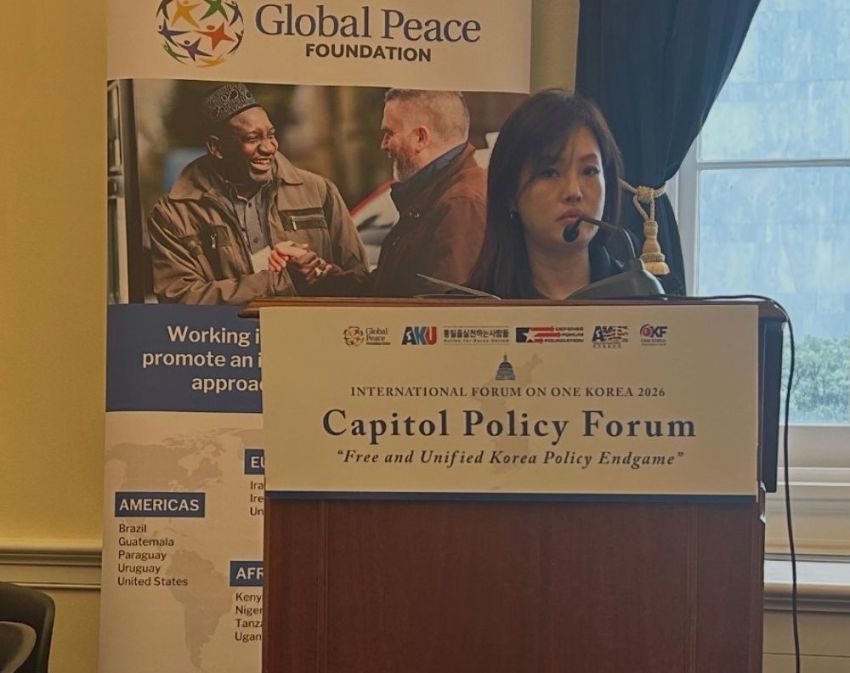
Speaking with the aid of a translator, Ji-Young Kim, another North Korean escapee, recalled listening to an outside radio broadcast for the first time at the age of 13. In North Korea, listening to outside broadcasts is a “dangerous choice,” the escapee said.
“If you’re caught, the punishment does not end with one person; it can extend to whole families,” Kim explained.
Despite the risk, Kim kept listening, and she learned about “a world where human beings could live in dignity, a society where people could speak freely, and the possibility that a person could change their future through their own efforts.”
Kim said that exposure to outside information changed her life, prompting questions about the narratives promoted by the North Korean government and eventually leading her to seek freedom.
After her escape, she joined Free North Korea Radio in 2016, a group that broadcasts news and information into North Korea, and currently serves as its president.
“One of the most powerful forces for changing North Korea is not military force but information,” the advocate said. “Information changes people, and changed people eventually change society. I am living proof of that.”
She noted that, for this reason, one of North Korea’s major fears is outside information, which it tries to block from its people through laws and severe punishments. North Korean authorities also try to block outside broadcasts through noise interference and repeated propaganda transmissions.
“For that reason, I view the South Korean government's recent suspension of radio broadcasts into North Korea as a very serious matter,” the Free North Korea Radio president stated. “It means closing, by our own decision, one of the few remaining channels through which North Koreans can access the truth.”
Last year, South Korea suspended its "Voice of Freedom" radio broadcasts to North Korea as part of a bid to ease tensions with Pyongyang, according to Seoul’s defense ministry.
Kim asserted that the North Korean regime is “not a system that changes easily through dialogue,” and it has only continued to strengthen control over its people and block information.
“The idea that peace can be maintained simply by avoiding provocation does not reflect reality,” she argued. “In the end, it is the North Korean people who pay the price for silence and concessions.”
“North Koreans live their entire lives surrounded by distorted information. They are continually taught that the United States is an aggressor and that the outside world is their enemy,” the advocate continued. “The most powerful tool to break through these lies is outside information. One radio, one small story device, or even one short story about the outside world can change a person's life.”
During a panel discussion titled “US-ROK Alliance for a Free & Unified Korea,” Lee criticized international policy approaches toward North Korea, including those of the United States.
He argued that decades of what he described as “management” strategies that focus on negotiation have failed to curb the regime’s nuclear ambitions or address human rights concerns affecting roughly 26 million people.
“These policies have operated under the hopeful assumption that negotiating with North Korea will lead to reform or freeze its nuclear program,” Lee said. “But in reality, the threat has continued to grow.”
“We must stop treating the branches and start addressing the source of the problem,” he told attendees, emphasizing the importance of increasing information flow into the country so that North Koreans can “realize the truth and become agents of their change.”
Lee also advocated for sanctions targeting the financial resources of leader Kim Jong Un, not the general population. Ultimately, he argued, a “free and independent Korea” would be the only lasting solution to both the nuclear threat and human rights conditions in North Korea.
Several speakers referenced a broader vision often described as the “Korean Dream,” which envisions the peaceful reunification of North and South Korea into a single democratic nation.
The Korean Peninsula has remained divided since 1945, when it was split along the 38th parallel following the end of World War II — a boundary initially intended as a temporary measure. Korea is now separated by the Demilitarized Zone.
News Source : https://www.christianpost.com/news/how-exposure-to-truth-led-to-a-north-korean-familys-escape.html
Other Related News

05/02/2026
Despite growing in 2025 Bible engagement has ticked down and returned to 2024 levels acco...
05/02/2026
New Testament scholar Jeremiah J Johnston believes the most compelling archaeological evi...

05/02/2026
By Anugrah Kumar Christian Post Contributor Saturday May 02 2026Interior of Saints Sergi...

05/02/2026
Jesus was always serving others Throughout Scripture we see stories of Him washing fee...
05/01/2026
By Leonardo Blair Senior Reporter Friday May 01 2026This 17th-century reliquary urn is b...

Follow


Download Our App


Copyright 2022 © Pro Preview. All Rights Reserved